
Aayushma Mehta - Author
2026-04-03
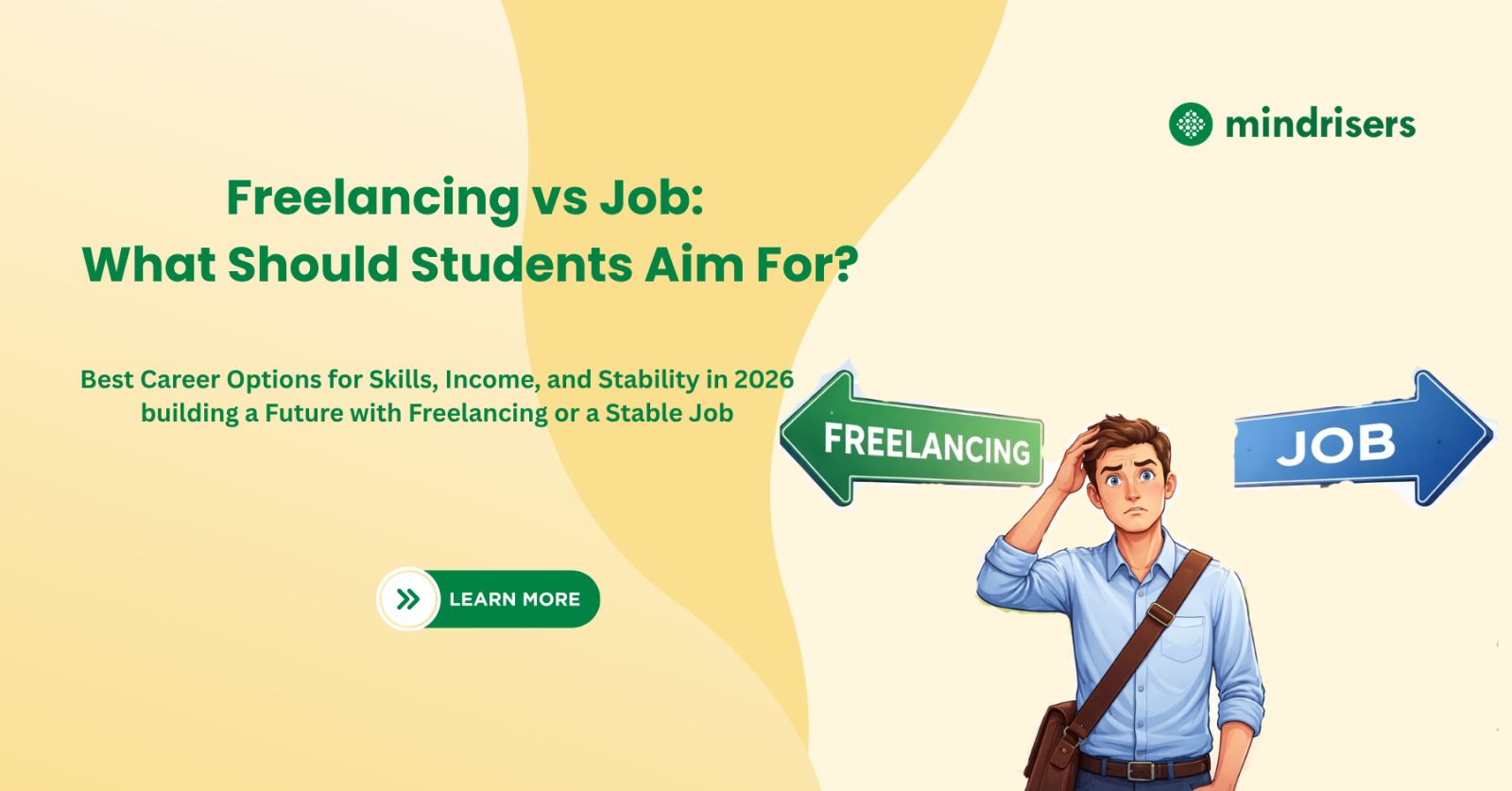
You’ve probably experienced this.
One moment, you’re scrolling through job vacancies and internship posts, thinking about stability and experience. The next moment, you see someone your age bragging about their income through freelancing.
It creates confusion.
Today, for many Nepali students, this isn’t just a passing thought, it’s a real decision that can shape your future. With more opportunities emerging, competition is also increasing, making it harder to decide which path truly makes more sense.
The truth is, both freelancing and jobs have changed a lot. What matters now is understanding how each one fits into your own journey, instead of just picking one blindly.
The Changing Work Culture in 2026
The traditional idea of “study, then you find a job, then you build your career” is no longer the only path.
Today:
- Companies hire freelancers for short-term projects
- Remote work has become normal
- Skills matter more than degrees in many industries
- Students are earning while still studying
For many Nepalese students, this shift is very real. After COVID-19, remote work has become more common, and people from Nepal are also trying to access these global opportunities especially in tech and digital fields.This means you’re no longer limited to local jobs. With just a laptop and internet, you can work with clients from the US, UK, Australia, and beyond. But at the same time, you’re competing with people from all over the world.And that’s where the real challenge begins.
Freelancing
Freelancing means working independently for clients instead of being employed by a single company. You choose your projects, your clients, and often your working hours. Some of the best freelancing sites for nepali students are Upwork, Fiverr, Totpal, remotejobsnepal and PeoplePerHour. These websites offer jobs from freshers to Professionals.
Some popular freelancing fields in 2026 include:
- Web and app development
- Graphic design and UI/UX
- Digital marketing and SEO
- Video editing and animation
- Cybersecurity and IT support
If you’re exploring where to start, many students begin by building practical skills through structured learning paths like web development, digital marketing, or cybersecurity training programs offered by IT Training institutes. These programs focus on real-world projects, which is exactly what freelancing clients look for.
The biggest attraction of freelancing is freedom.
You can:
- Work from home
- Choose your own schedule
- Earn in foreign currency
- Scale your income beyond a fixed salary
But here’s the part people don’t talk about enough.
Freelancing is not instant success.
In the beginning, you may:
- Struggle to get your first client
- Compete with experienced freelancers
- Work for low pay just to build your portfolio
- Face rejection multiple times
This is why having hands-on experience through internships or project-based training can make a huge difference when starting out.
Jobs
A job, on the other hand, provides structure and stability.
You work under a company, follow a fixed schedule, and receive a consistent monthly salary. For many students, especially those just starting out, this is the most practical option.
A job helps you:
- Learn from experienced mentors
- Understand professional work environments
- Build discipline and responsibility
- Gain hands-on experience on real projects
- Develop teamwork and communication skills
Many students who take part in internship programs or career-focused training (like those offered through internship and job placement support) find it easier to transition into professional roles because they already understand workplace expectations.
However, jobs also have limitations.
You may:
- Feel restricted by fixed working hours
- Experience slower income growth
- Have limited flexibility
- Be dependent on one source of income
Job Vs Freelancing: A Deeper Perspective
|
Factor |
Job |
Freelancing |
|
Income |
Fixed monthly salary, stable |
Variable income, can be high or low |
|
Flexibility |
Fixed working hours |
Flexible schedule, work anytime |
|
Stability |
High job security (in most cases) |
Low stability, depends on clients |
|
Growth |
Structured career path, slower progression |
Fast growth potential, skill-based |
|
Stress |
Work pressure, deadlines, office politics |
Client pressure, inconsistent workload |
|
Lifestyle |
Routine-based, less freedom |
More freedom, better work-life balance |
Freedom without the right skills gets frustrating fast.
And playing it safe without growing can feel stuck.
That’s why choosing a path without thinking it through can go wrong.
Common Mistakes Students Make
Many students make decisions based on trends rather than reality.
Some people rush into freelancing without really building their skills first. When clients don’t come easily, it gets frustrating and many just give up.
On the other hand, some play it too safe with jobs and never even try freelancing, missing out on bigger opportunities and better earning potential.
Another common mistake is underestimating the importance of guidance. Learning everything randomly from the internet can slow down your progress, which is why structured courses and mentorship can help you move faster in the right direction.
The Smart Approach for 2026: Hybrid Path
In 2026, the smartest students are not choosing between freelancing and jobs.They are combining both.
Step 1: Start with Learning
Focus on building a strong skill set. This could be programming, cybersecurity, design, or digital marketing.
If you’re unsure where to begin, a great approach is to explore training institutions that offer trial classes. These sessions give you a real feel of what the course is all about how it’s taught, what skills you’ll gain, and whether it matches your interests. Instead of committing blindly, you get the chance to experience the learning environment firsthand and make a more confident decision.
At Mindrisers, we understand that choosing the right path can feel overwhelming. That’s why we offer 3-day trial classes for students who are still unsure, along with free career consultation to guide you based on your interests and goals. This way, you don’t just choose a course, you choose the right direction for your future.
Step 2: Get a Job or Internship
A certificate alone isn’t enough, what really matters is what you do after. Look for internship programs once you complete your course.
That’s where you actually understand how real-world work happens: professionalism, deadlines, teamwork, and problem-solving.This stage builds your confidence.
Step 3: Start Freelancing on the Side
Once you have basic skills, start taking small freelance projects.
Even if the pay is low at first, the experience matters more.
You will learn:
- How to talk to clients
- How to deliver work professionally
- How to handle feedback and deadlines.
Students who have already worked on real projects during training or internships often find this transition much smoother.
Step 4: Grow and Decide
As your freelancing income becomes consistent, you can decide:
- Continue both for stability and extra income
- Or switch fully to freelancing for freedom
Why This Matters for Nepalese Students
For students in Nepal, this decision has even more impact.
Freelancing allows you to:
- Earn in dollars and spend in Nepali rupees
- Work remotely without leaving the country
- Build a global career
But it also comes with challenges:
- Difficulty in International Payments
- International Competition
- Need for strong portfolios instead of just certificates
Payment systems and withdrawals are expected to improve making it easier, especially for freelancers, to receive international payments.
That’s why skill-based learning and practical exposure are so important before stepping into freelancing.
Looking Ahead: The Future of Work
The future isn’t about choosing just one path - it’s about staying adaptable.
The global job market has shifted in a big way. Companies realized work can be done from anywhere, which is why remote jobs have become more common and accepted than ever before.
In the coming years:
- More companies will hire remote workers
- Freelancing platforms will become more competitive
- AI tools will change how work is done
- Skills will matter more than ever
Students who continuously learn, upgrade their skills, and gain real-world experience will always stay ahead.
Conclusion
There isn’t a universal answer when deciding between freelancing and a full-time job in Nepal. The right choice varies based on your goals, personality, lifestyle, and financial situation. Many individuals even blend both options by taking on side gigs or following a hybrid approach.
By recognizing the advantages and drawbacks of each path, you can make a more informed and strategic career choice. Whether you pursue freelancing or a traditional 9-to-5 role, success ultimately depends on continuous learning, adaptability, and staying aligned with your long-term goals
Recent Post
View All
From Classroom Learning to Real-World Experience: My First Step into Digital Marketing
2026-08-24.551 Views
Inside Mindrisers Cybersecurity Course: Modules, Tools & Career Paths Explained
2026-08-13.606 Views
What Are the Benefits of AI-Powered Cybersecurity Training?
2026-08-10.617 Views
Artificial Intelligence is Taking over CyberSecurity
2026-08-04.646 Views

Never miss an Opportunity !
Want to learn TOP 2025 IT Skills ?
We open IT skill classes Monthly in Design, Development, Deployment, Data etc.
Have something to Ask ?
get admission enquiry