
Kevin Joshi - Author
2026-04-22
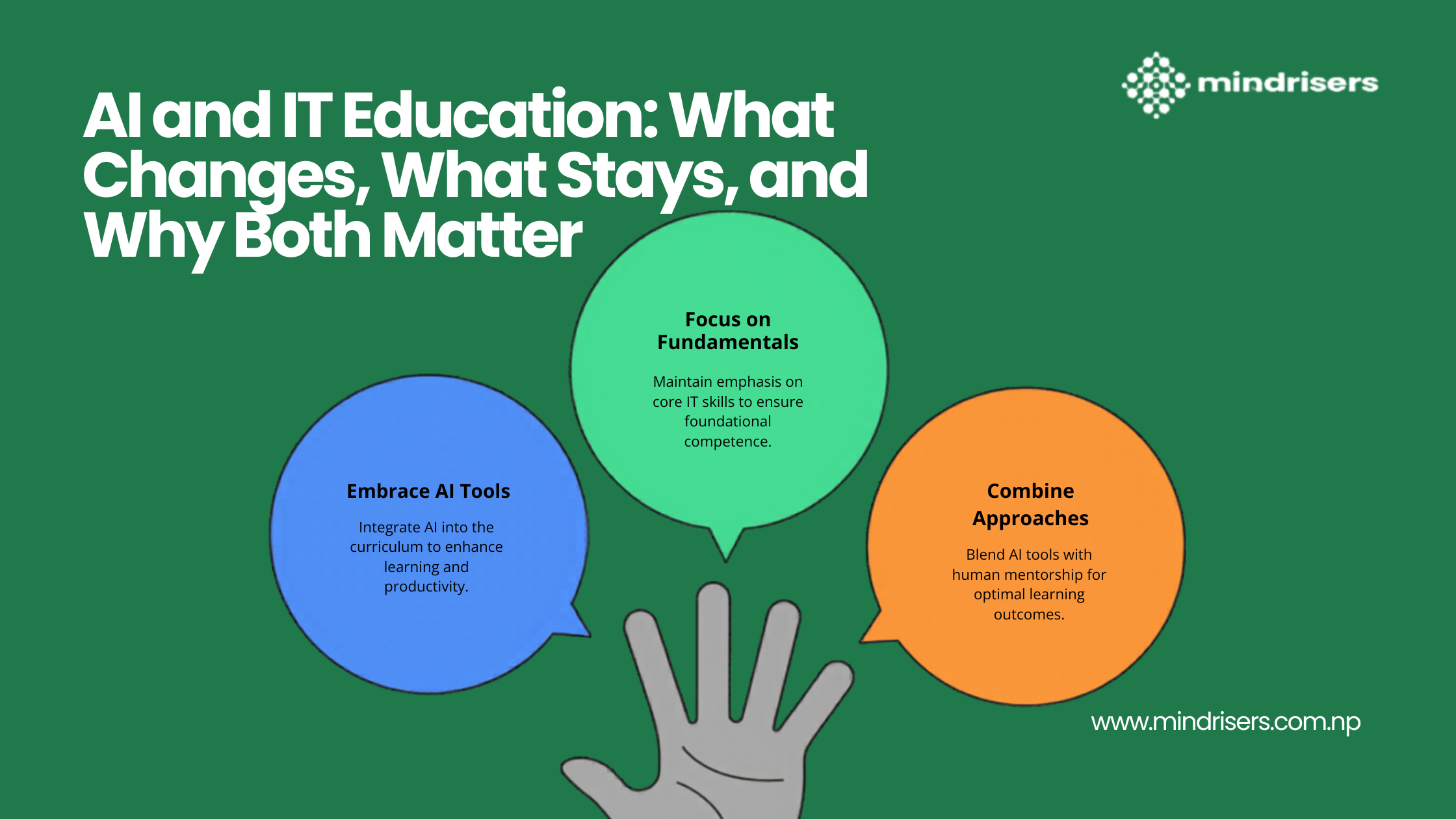
Imagine having a tutor who can explain the same idea in many different ways until it finally clicks one that never gets tired or impatient. That is not a dream anymore. That is what AI-powered learning looks like today.
OpenAI recently confirmed that ChatGPT is now serves over 600 million users outside of traditional classroom settings.
In countries like Estonia, governments are treating AI as a national skill-building tool. In classrooms around the world, students are using AI not to skip the work, but to do it better and faster.
Similarly here at Mindrisers, one of our students, a 19-year-old from Bhaktapur who had never coded before, used an AI tool called GitHub Copilot to write her first functioning web app, in her third week of training.
Three years ago, that would have been impossible. Getting a beginner to build something working usually took months. Today, the right combination of AI assistance and proper instruction can compress that timeline dramatically. But notice we said 'combination.' The AI did not teach her. Her instructor did. The AI gave her a faster path to get there.
This guide will walk you through exactly what has changed, what has not, and what you should do about it, whether you are a student just getting started, a parent choosing a training program, or a professional who needs to stay competitive.
How AI Has Changed the Way We Learn
1.1 What AI Actually Does in a Learning Context
AI learning tools platforms like ChatGPT, GitHub Copilot, Google Gemini, and others, do a few things unusually well:
• They explain concepts in multiple ways until something clicks. Stuck on how a 'for loop' works in Python? Ask the AI to explain it using a real-life example. Ask again with a different example. Keep going until it makes sense. A human tutor has limited patience for repetition. AI does not.
• They give immediate feedback. When you write code and it breaks, an AI can tell you within seconds what went wrong and why. Traditional learning meant waiting for a teacher to check your work.
• They remove the embarrassment of not knowing. Many students especially beginners are afraid to ask what feels like a 'dumb question' in class. With AI, there is no social pressure. You can ask anything.
• They adjust to your pace. You do not have to keep up with a class. If you need to spend three hours on one concept, you can. If you are ahead, you can move faster.
1.2 What AI Does Not Do Well
This matters just as much. Here is where AI falls short in education:
• AI cannot verify whether you actually understand something it only knows what you type. You can get a 'correct' answer from AI without learning anything.
• AI has no context about your career goals, your strengths, or your specific situation in Nepal's job market. It gives general answers.
• AI makes mistakes. Confidently. A student who cannot evaluate AI output will not catch errors and that is dangerous in technical work like coding or data analysis.
• AI cannot motivate you. Learning is hard. It requires discipline, structure, and sometimes a push from someone who knows you and believes in you.
What This Means for the Future
The future of work is already shifting, and fast. A recent global survey found that 70 percent of employers would prefer hiring someone with strong AI skills over someone with more years of experience in a specific role.
For students and professionals thinking about where to focus:
• IT courses that include AI and AI automation components will carry more value in the job market.
• Understanding the logic behind AI tools will matter more than just knowing how to operate them.
• Critical thinking and ethical judgment will become core professional skills across every IT role.
• Continuous learning will become the professional norm, not something that ends after a single course.
Nepal's tech industry is expanding steadily. Businesses in banking, e-commerce, healthcare, and government services are all digitalizing. The demand for IT professionals who understand both foundational technology and modern AI tools is only going to grow in the years ahead.
How to Use AI the Right Way
2.1 The Smart Student's Approach
We have watched students use AI in two completely different ways. One group uses it to learn faster. The other uses it to avoid learning. The outcomes are very different.
USE AI FOR THIS
• Understanding a concept, you are confused about
• Debugging code (but read the explanation, not just the fix)
• Exploring how professionals use a tool in real jobs
• Practicing problems when no teacher is available
• Getting feedback on your writing or code before submitting
AVOID THIS
• Copying AI-generated answers and submitting them as yours.
• Skipping steps because AI can do them for you.
• Trusting AI output without checking it.
• Using AI to answer exam questions you have not studied.
• Letting AI make decisions you should be making yourself.
2.2 The Test You Should Always Apply
Before you move on from any topic, ask yourself one question:
Can I explain this to someone else, in my own words, without looking at any notes or asking AI? If the answer is no, you have not learned it yet. Go back.
This sounds simple. It is not easy. But it is the single most reliable way to know whether you have actually learned something versus just gotten the answer.
2.3 Real Risk: False Confidence
One pattern we see regularly at Mindrisers: students who use AI heavily during practice sessions often feel more confident than they should going into interviews or assessments. They have seen a lot of correct code, but they did not write it. When an interviewer asks them to code on a whiteboard, the gap becomes obvious fast. The Nepali IT hiring market is competitive. Companies like Deerwalk, F1Soft, Leapfrog, and Cloud Factory have rigorous technical interviews. Copying AI answers during practice will not prepare you for that. Struggle, repetition, and real understanding will.
What This Means for Your Career
3.1 What Employers Actually Want Now
We speak directly with hiring managers at IT companies in Nepal as part of our placement process. Here is what they tell us they are looking for:
Technical Skills
- Can you code without AI assistance?
- Do you understand data structures?
- Can you solve a new problem independently?
AI Literacy
- Can you write a good prompt?
- Can you spot an AI error?
- Do you know when NOT to use AI?
Soft Skills
- Can you communicate clearly?
- Do you take initiative?
- Can you work with a team under pressure?
Notice that 'AI literacy' is in the middle, not at the top. Technical fundamentals still come first. A fresh graduate who knows how to use ChatGPT but cannot write a basic function without it will not last long in a real job.
3.2 Where AI Is Already a Core Tool
Software Development: Tools like GitHub Copilot and Amazon CodeWhisperer now write portions of production code. Developers who know how to review, test, and correct AI-generated code are significantly more productive. Those who cannot are left behind.
Cybersecurity: Threat detection platforms increasingly use machine learning. Security analysts at firms like CG Net and Vianet need to understand how AI flags suspicious behavior and when it gets it wrong.
Digital Marketing: Campaign analysis, ad copy generation, SEO optimization, and customer segmentation now all involve AI tools. If you are not using them, your competitor is.
Data Analytics: Tools like Tableau and Power BI now have AI-assisted insights built in. But the ability to ask the right question and interpret the result still requires a human analyst.
Why Training Institutes Still Matter
4.1The Honest Truth About Self-Learning
Can you learn IT skills entirely on your own, using free YouTube videos and AI tools? Yes. Some people do. But here is what our data shows: of the students who start self-learning IT without structured support, fewer than 15% reach a job-ready skill level within one year. Of students in structured programs with mentorship, that figure rises to above 70%.
That is not an argument to stop using free resources. It is an argument for combining them with proper structure and human guidance.
4.2 What a Good Institute Provides That AI Cannot
Real Mentorship
A good instructor does not just teach you Python. They tell you which path to take given your specific background, goals, and the current job market. They spot when you are going in the wrong direction not just in your code, but in your thinking. AI cannot do this. It does not know you.
Accountability and Structure
Most people learn better with deadlines, classmates, and someone checking their progress. The structure of a training program forces you to keep moving. AI is infinitely patient which means it will wait forever for you to come back to it. Programs do not.
Peer Learning
Working alongside other students is one of the most underrated parts of education. You see how other people solve the same problem. You explain things to each other. You form professional networks that may last decades. None of that happens in isolation with an AI chatbot.
Professional Ethics and Judgment
Understanding when not to use data. Knowing the ethical limits of automation. Learning how to handle a difficult client or manage a failing project. These are things you learn from humans with professional experience, not from AI.
4.3 What a Good IT Institute Must Change
Institutes that refuse to adapt are just as much a problem as students who over-rely on AI. Here is what we believe every IT training program must now include:
Hands-on projects from week one. Not just exercises,real outputs a student can show in a portfolio. Which mindrisers is implementing in each session.
Direct exposure to AI tools as part of the curriculum. Students should learn to use GitHub Copilot, ChatGPT for debugging, and AI-assisted design tools as standard practice.
Assessment by demonstration, not memorisation. Can you build it? Can you explain your decisions? That matters more than reciting definitions.
Honest career guidance. What jobs exist in Nepal right now? What do those jobs actually pay? What skills do those employers need? Students deserve specific answers.
Tailored Advice
5.1 If You Are a Student
Pick one IT skill and go deep before going broad. The biggest mistake young students make is jumping between topics. Python one week, web design the next, networking the week after. Depth beats breadth in every technical interview.
Build at least one project you are proud of before you finish your training. Not a tutorial project something you designed yourself, even if it is small. A to-do app you built solo says more than a Netflix clone you followed along with.
Get comfortable being wrong. The students who improve fastest are the ones who ask questions without embarrassment, show their incomplete work for feedback, and try things that might not work.
5.2 If You Are a Parent
Certificates matter less than you think. Employers in Nepal's IT sector care whether a candidate can do the job. Before you pay for a program, ask to see what past graduates are doing now. Ask which companies have hired from that institute. Ask whether students build real projects.
Do not let your child learn in isolation. Home learning combined with a structured program and mentorship gives the best results. Social learning environments, where students push each other, are a genuine advantage.
5.3 If You Are a Working Professional
You do not need to become an AI expert. You need to become fluent in the AI tools relevant to your specific role. A graphic designer needs to know Midjourney and Adobe Firefly. A project manager needs to know how to use AI to analyze progress reports. A developer needs to know Copilot.
Your experience is your edge. AI can write code, but it cannot replace the judgment of someone who has shipped products, managed clients, and solved real problems. Use AI to work faster, not to replace your thinking.
The Future Belongs to the Curious
We have said this to our students for years, and it is more true now than ever: the people who thrive in tech are not the ones who know the most. They are the ones who keep learning.
AI will change every six months. New tools will appear. Some skills will become obsolete faster than expected. The students who win are not those who master today's tools, they are those who have developed the habit and ability to adapt.
At Mindrisers, we try to teach that habit alongside the technical skills. We believe that is what education should do.
Recent Post
View All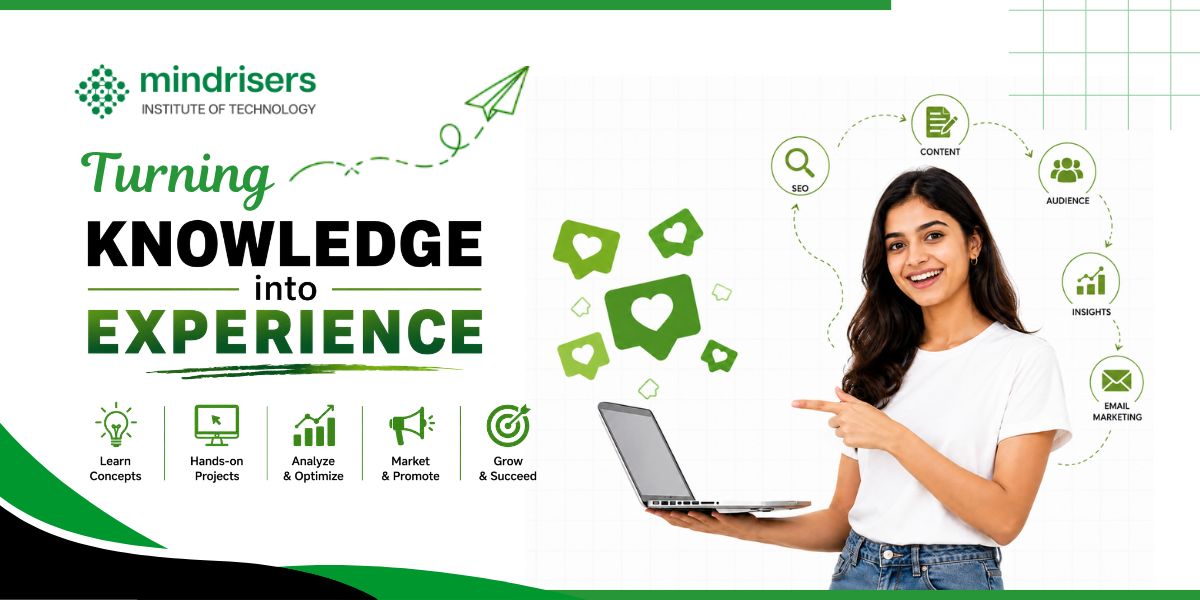
From Classroom Learning to Real-World Experience: My First Step into Digital Marketing
2026-08-24.551 Views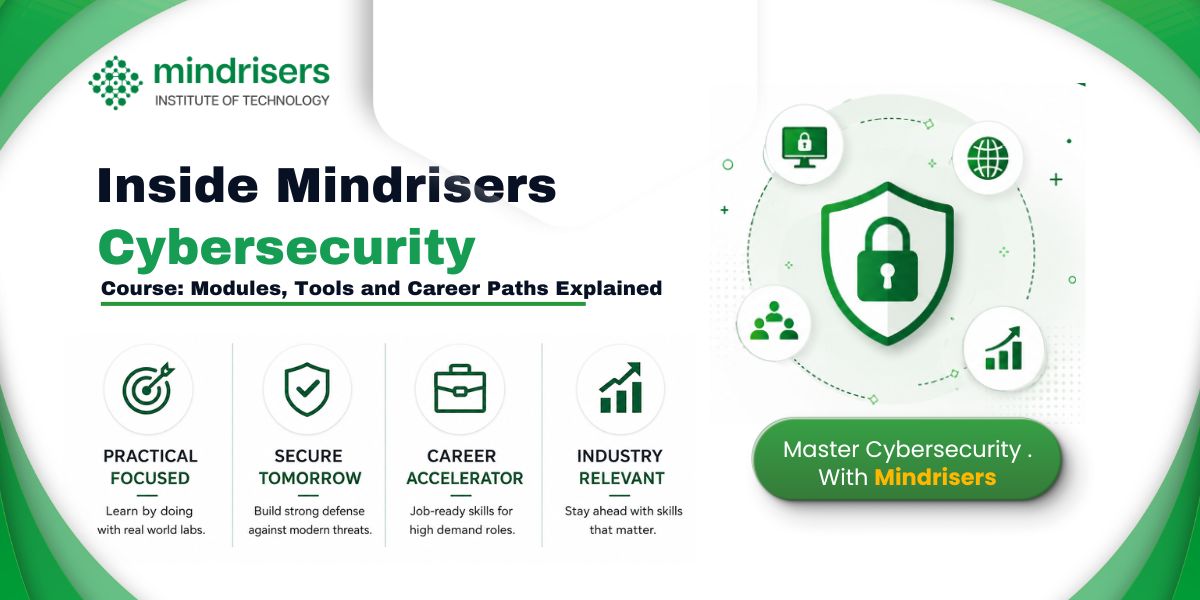
Inside Mindrisers Cybersecurity Course: Modules, Tools & Career Paths Explained
2026-08-13.606 Views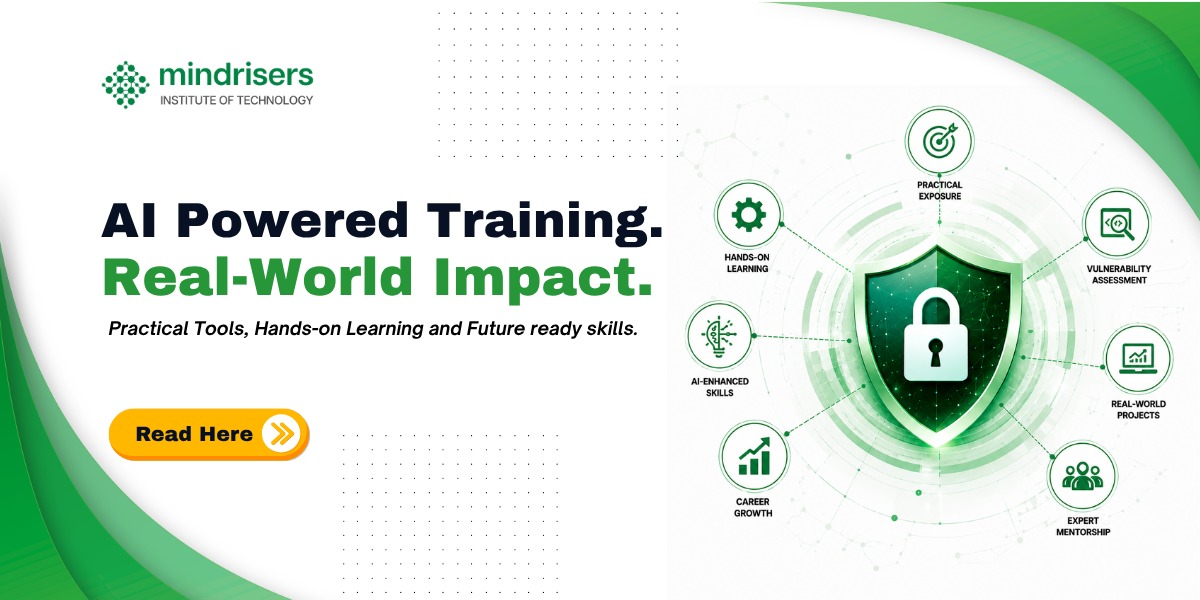
What Are the Benefits of AI-Powered Cybersecurity Training?
2026-08-10.617 Views
Artificial Intelligence is Taking over CyberSecurity
2026-08-04.646 Views

Never miss an Opportunity !
Want to learn TOP 2025 IT Skills ?
We open IT skill classes Monthly in Design, Development, Deployment, Data etc.
Have something to Ask ?
get admission enquiry